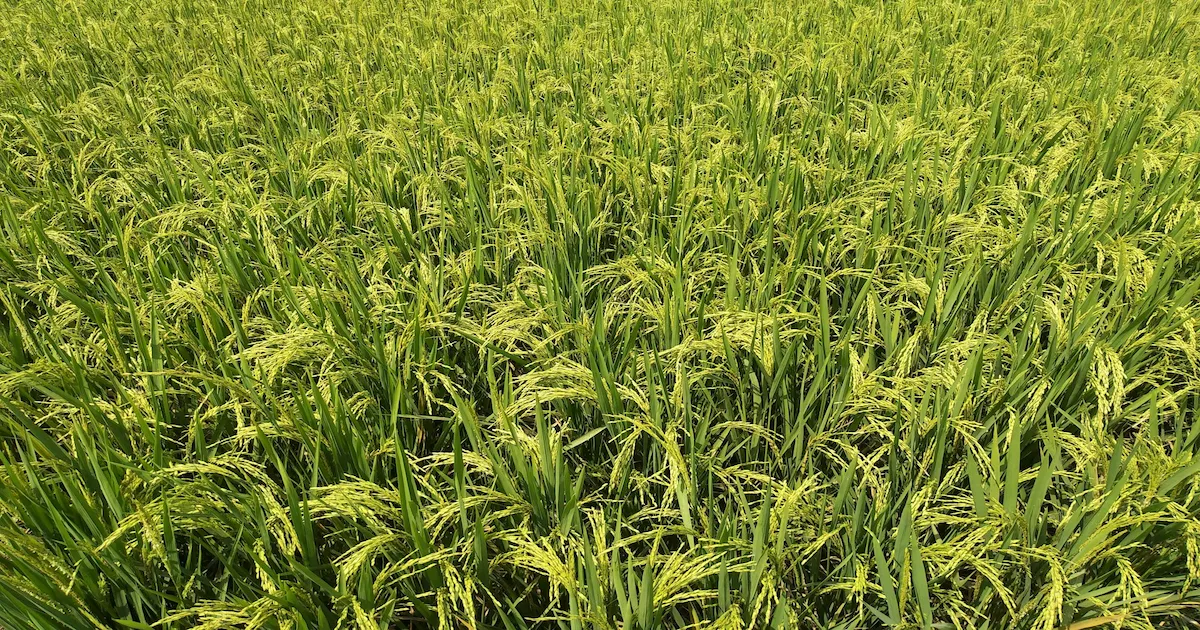
Rice
Oryza sativa L.
What is Rice?Rice is India's number one food crop. It is grown on about 44.6 million hectares, which is nearly one-fourth of all farmland in India. More than half of the people in India depend on rice as their main food, especially in southern and eastern states. India is the second-largest producer of rice in the world, after China. Rice farming is an important part of our culture and provides income to millions of farming families.The rice plant has thin, spreading roots and can grow up to 6 feet tall. Its stems are round and jointed, and the leaves are long and pointed. The grains we eat grow on stalks at the top of the plant. In India, there are more than 333 types of rice. Some are fragrant Basmati varieties with long grains, while others are regular (non-Basmati) types. Every part of the rice plant is useful. The grain is used for food, the bran is used to make oil, and the husk and straw are used as animal feed. Rice waste is also used to make eco-friendly products like paper and packaging.
Overview
Crop summary and key facts
What is Rice?
Rice is India's number one food crop. It is grown on about 44.6 million hectares, which is nearly one-fourth of all farmland in India. More than half of the people in India depend on rice as their main food, especially in southern and eastern states. India is the second-largest producer of rice in the world, after China. Rice farming is an important part of our culture and provides income to millions of farming families.
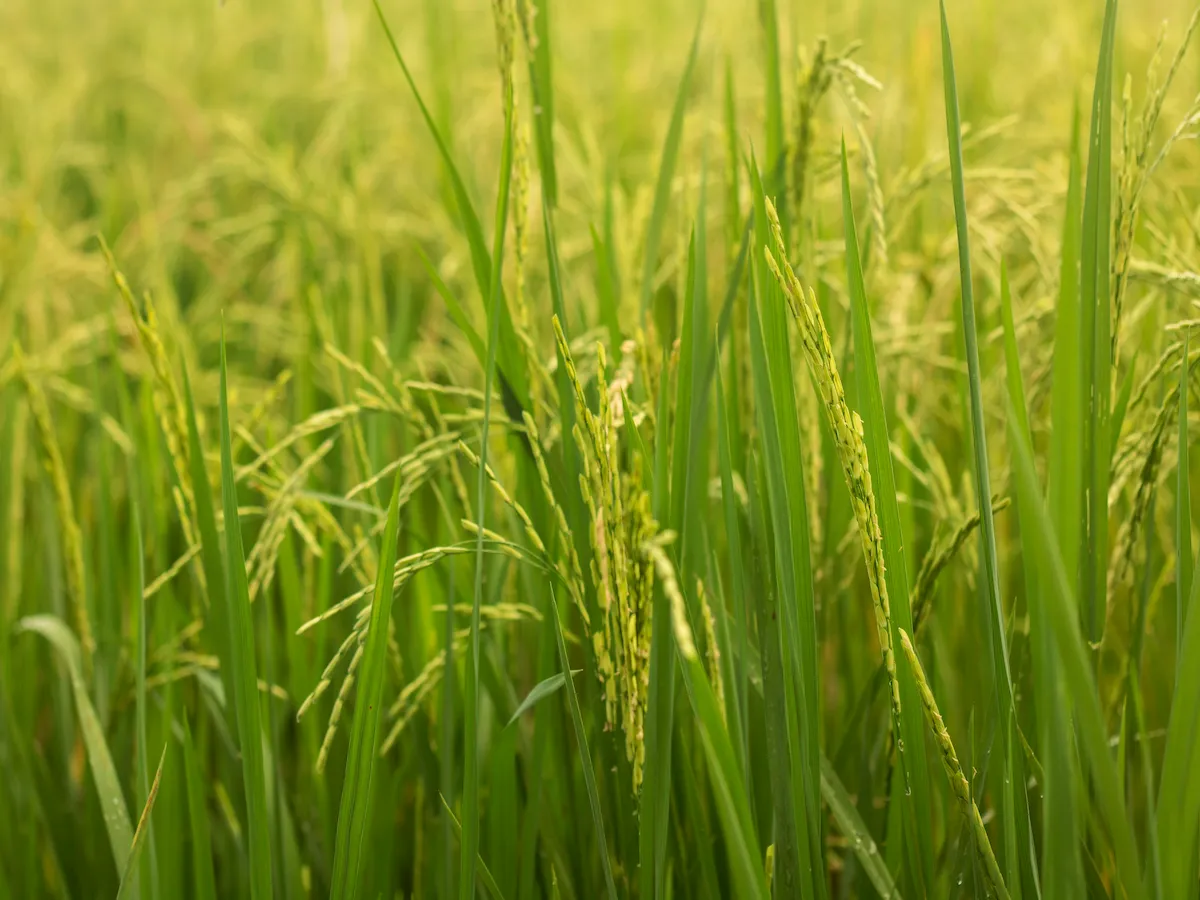
The rice plant has thin, spreading roots and can grow up to 6 feet tall. Its stems are round and jointed, and the leaves are long and pointed. The grains we eat grow on stalks at the top of the plant. In India, there are more than 333 types of rice. Some are fragrant Basmati varieties with long grains, while others are regular (non-Basmati) types. Every part of the rice plant is useful. The grain is used for food, the bran is used to make oil, and the husk and straw are used as animal feed. Rice waste is also used to make eco-friendly products like paper and packaging.
Key Information
Scientific Name
Oryza sativa L.
Category
Expected Yield
22-25 quintals per acre on average (can range from 10-40 quintals)
Soil & Climate
Optimal environmental conditions
Soil Requirements
🌱 Suitable Soils
- Heavy clay soil
- Clay loam
- Sandy loam
- Silty loam
⭐ Ideal Soil
Heavy clay soil that holds water well and is rich in organic matter (like compost or manure).
⚖️ Soil pH (Acidity)
- Can grow in pH 5.0 to 9.5
- Best range: 6.0 to 7.0
✅ What Makes Good Soil
- Good water-holding capacity (does not drain too quickly)
- No salinity (salt) problems
- Forms a soft puddle when water is added
- Rich in nutrients
🌾 Other Suitable Soils
- Black soil
- Red soil
- Laterite soil
💡 Simple Tip
Clay soil that forms good mud puddles is best for rice farming.
Climate Requirements
🌡️ Temperature
Normal range: 16–30°C
During planting: 20–30°C
During growth: 20–40°C (best: 25–35°C)
During harvesting: 16–27°C
🌧️ Rainfall
Requires 100–200 cm rainfall per year
Rainfall should be evenly distributed throughout the season
💧 Humidity
Prefers humid conditions: 70–80%
🌍 Altitude Range
Grows from sea level up to 3000 meters altitude
❤️ What Rice Loves
Warm to hot temperatures
High humidity
Plenty of water (rainfall or irrigation)
Season
“Kharif (main), Rabi, Zaid”
Varieties
Recommended seeds and cultivars
Pusa Basmati 1121
Basmati (Fragrant Rice)Yield Potential
18-22 quintals
Maturity
140-145
Pusa Basmati 1509
Basmati (Fragrant Rice)Yield Potential
20-24 quintals
Maturity
120-125
Pusa Basmati 1637
Basmati (Fragrant Rice)Yield Potential
22-26 quintals
Maturity
125-130
Seed & Planting
Sowing rates, spacing, and methods
🌱 How Much Seed
- Basmati / Fine varieties: 8–10 kg per acre (Transplanting)
- Coarse / General varieties: 12–15 kg per acre (Transplanting)
- Hybrid varieties: 5–6 kg per acre (Transplanting)
- Direct Seeding (DSR): 20–25 kg per acre
- Germination rate: At least 80% seeds should sprout
💊 Treating Seeds
Choose one method to protect against diseases:
| Type | Medicine | Amount | Method |
|---|---|---|---|
| Chemical | Carbendazim 50% WP | 2 gm/kg seed | Soak 8–24 hrs |
| Anti-bacterial | Streptocycline | 0.1 gm/kg | Mix with above |
| Organic | Trichoderma viride | 10 gm/kg | Slurry coating |
⚙️ How to Do It
-
Step 1: Salt Water Test
Dissolve 1 kg salt in 10 L water. Add seeds, remove floating seeds, and wash remaining seeds with clean water. -
Step 2: Soaking
Soak seeds in prepared solution (Carbendazim + Streptocycline) for 8–24 hours. -
Step 3: Incubation
Keep seeds in a wet gunny bag for 24–36 hours until sprouting begins. -
Step 4: Sowing
Shade-dry seeds briefly before sowing in nursery or main field.
Cultivation
Field preparation and agronomy
Cultivation
🌾 Getting Your Field Ready
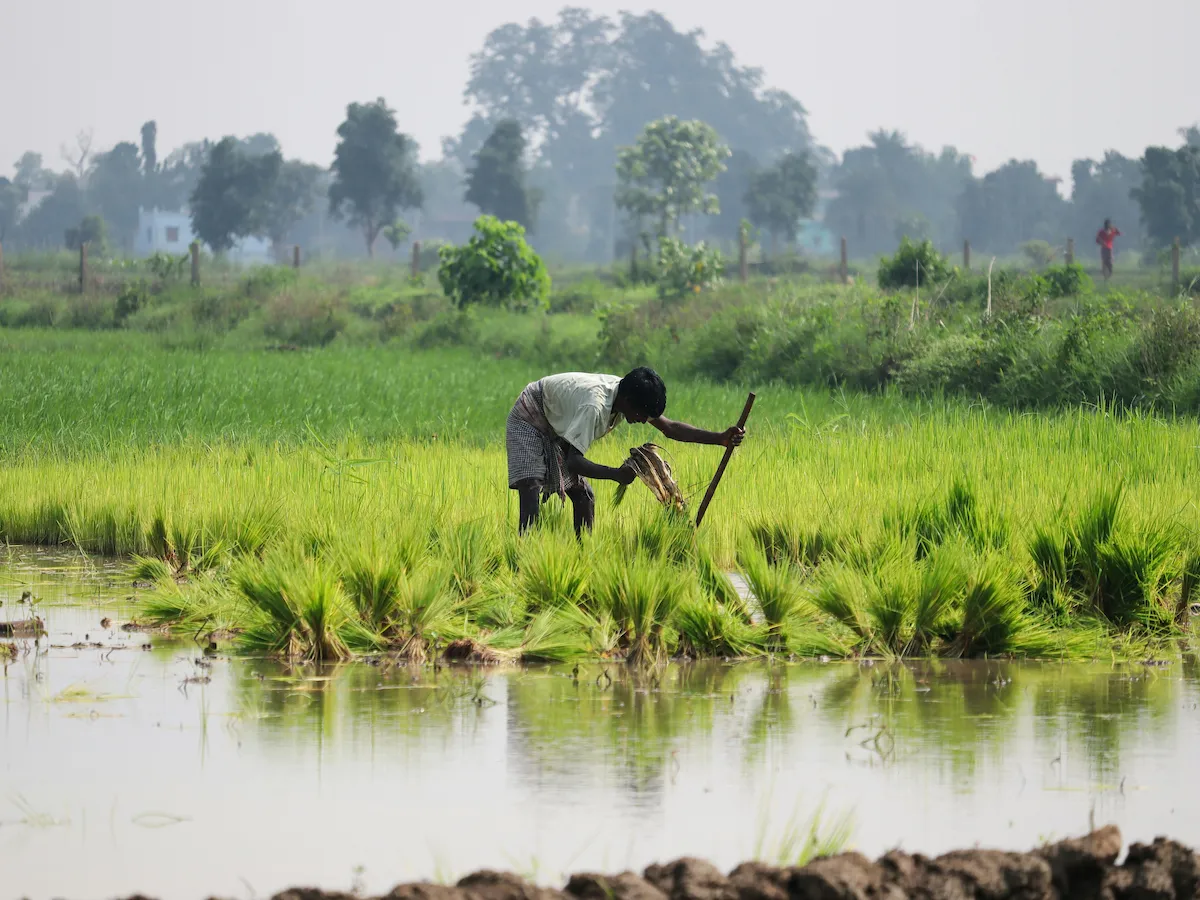
1️⃣ 🌱 Green Manuring (Saves Money!)
Grow these crops and plow them back into soil:
Dhaincha: 20 kg/acre
Sunhemp: 20 kg/acre
Cowpea: 12 kg/acre
Plow after 6–8 weeks (1 day before transplanting). Saves about 25 kg nitrogen per acre.
2️⃣ 🚜 Plowing
First plowing: In dry soil
Second plowing: With water (to identify uneven areas)
3️⃣ 📏 Leveling
Use laser land leveler if available
Saves up to 10% water
Ensures uniform water distribution
4️⃣ 💧 Puddling
Add 5–10 cm standing water
Mix soil and water to form soft mud
Helps reduce water loss
Important step for transplanted rice cultivation.
5️⃣ 🧱 Build Bunds
Create bunds (mud walls) 20–30 cm high
Repair cracks and rat holes
Make channels for proper water control
Stages
Crop growth timeline and key tasks
1
🌱 Baby Plant
Days: 0–21 days
Duration: About 3 weeks
What’s Happening: Seeds germinate, roots develop, and first leaves appear
Recommended Practices
Make nursery, keep moist, add Urea after 2 weeks
2
🌱 Making Shoots
- Days: 22–60 days
- Duration: 4–6 weeks
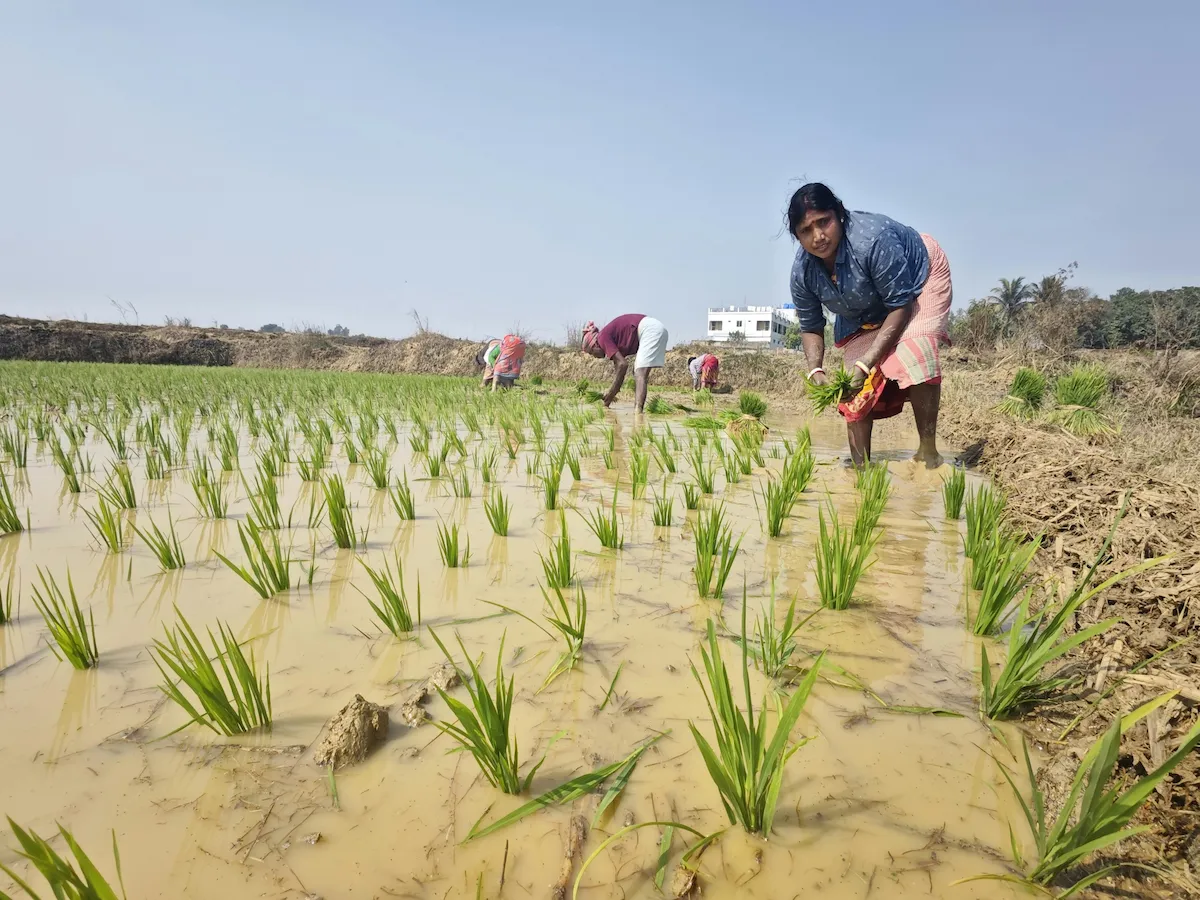
- What’s Happening: Plant grows, produces side shoots (tillering), and is transplanted
Recommended Practices
Transplant to main field, apply first fertilizer (day 21–25), remove weeds, maintain 5–7 cm water level
3
🌾 Growing Tall & Flower Buds
- Days: 60–80 days
- Duration: 2–3 weeks
- What’s Happening: Stem elongates and flower buds form internally (critical stage for yield)
Recommended Practices
Apply second fertilizer (day 45–50), maintain 5–10 cm water, avoid drying, monitor pests
4
🌼 Flowering
- Days: 80–100 days
- Duration: 2–3 weeks
- What’s Happening: Flowers open and pollination occurs, grains begin forming
Recommended Practices
Maintain 5–8 cm water (very critical), protect from pests, avoid spraying during flowering
5
🌾 Grains Getting Ready
- Days: 100–145 days
- Duration: 4–6 weeks
- What’s Happening: Grains fill, harden, and mature for harvest
Recommended Practices
Keep soil moist, drain water 10–14 days before harvest, protect from birds, prepare for harvesting
Nutrition
Fertilizers and deficiency remedies
Fertilizer Schedule
NPK & micronutrient application
🌱 Nutrient Requirements (Per Acre)
| Nutrient | Requirement | Fertilizer to Buy |
|---|---|---|
| Nitrogen (N) | 50 kg | Urea: 110 kg |
| Phosphorus (P) | 12 kg | DAP: 27 kg OR SSP: 75 kg |
| Potassium (K) | 12 kg | MOP: 20 kg |
| Zinc | 10 kg | Zinc Sulphate (21%): 25 kg |
⏱️ Recommended Fertilizer Schedule
| Stage | Fertilizer Combination | Quantity | Purpose |
|---|---|---|---|
| Basal Dose (Final Puddling) | Urea + DAP + MOP + Zinc* | Urea: 37kg, DAP: 27kg, MOP: 10kg, Zinc: 25kg | Root growth and early vigor. |
| Tillering Stage (21–25 Days) | Urea | 37 kg | Increases number of shoots (tillers). |
| Panicle Initiation (45–50 Days) | Urea + MOP (Remaining) | Urea: 36kg, MOP: 10kg | Improves grain weight and stem strength. |
*Warning: Do not mix Zinc Sulphate and DAP directly. Apply them separately to avoid nutrient lock-up.
🔄 NPK Complex Options
- Option A: NPK 20:20:0 (60 kg) + Urea (65 kg split into 3 doses).
- Option B: NPK 12:32:16 (50 kg) + Urea (80 kg split into 3 doses).
⚠️ Micronutrient Deficiency Guide
| Problem | Symptoms | Solution |
|---|---|---|
| Zinc (Khaira Disease) | Rusty brown spots on leaves; stunted plant. | Spray 0.5% Zinc Sulphate + 0.25% Lime solution. |
| Iron Deficiency | New leaves turn pale yellow or white. | Spray 1% Ferrous Sulphate (1kg in 100L water). |
💡 Money-Saving Tips
- Soil Testing: Only apply what your soil lacks. This can save up to ₹2000 per acre.
- Neem Coated Urea: Always use Neem Coated Urea as it releases nitrogen slowly and reduces leaching.
- Green Manure: Sowing Dhaincha or Sunhemp before rice and plowing it in can replace 25-30kg of Nitrogen.
- Leaf Color Chart (LCC): Use an LCC to decide if the plant actually needs Urea, preventing over-fertilization.
| Stage | Fertilizer Type | Quantity |
|---|---|---|
| Before Final Puddling | Urea + DAP + MOP + Zinc Sulphate | 37 kg Urea + 27 kg DAP + 20 kg MOP + 25 kg Zinc (if needed) |
| 21-25 Days After Planting | Urea | 37 kg |
| 45-50 Days After Planting | Urea | 36 kg |
Nutrient Deficiencies & Remedies
Zink Deficiency (Khaira Disease)
Iron Deficiency
Nitrogen Deficiency
Phosphorus Deficiency
Potassium Deficiency
Sulfur Deficiency
Irrigation
Water requirements and scheduling
Irrigation Schedule
Water & Irrigation Requirements
💧 Total Water Needed
About 1500 liters of water is needed to produce 1 kg of rice.
🌱 Critical Watering Times
| Stage | Days | Water Depth | Importance | What to Do |
|---|---|---|---|---|
| Just Planted | 0–15 | 2–5 cm | Very Important | Keep water all the time |
| Making New Shoots | 15–40 | 5–7 cm | Very Important | Keep water standing |
| Most Shoots | 40–60 | 5–10 cm | Important | Don't let water dry |
| Flower Buds Forming | 60–75 | 5–10 cm | MOST IMPORTANT | Never let water run out |
| Flowering | 75–90 | 5–8 cm | MOST IMPORTANT | Must have water always |
| Grains Filling | 90–110 | 3–5 cm | Important | Keep moist |
| Almost Ready | 110–120 | 0 cm | - | Drain 10–14 days before cutting |
⚠️ Most Critical Times
- Just after planting (0–15 days)
- Making new shoots (15–40 days)
- Flower buds forming (60–75 days) – Highest priority
- Flowering (75–90 days) – Highest priority
- Grains filling (90–110 days)
💡 Simple Tips
- Maintain 5–10 cm water during key stages
- Drain occasionally to control pests (avoid during critical stages)
- Avoid repeated drying and flooding during flower bud stage
- Stop irrigation 10–14 days before harvest
Pests & Diseases
Identification, damage, and control
Pests
Brown Plant Hopper (Small jumping insects)
⚠️
Hopper burn: Round patches of field turn brown and dry
Plants turn yellow → brown → then die
Sticky honeydew on leaves leading to black mold growth
Severe wilting of plants
Damage appears in patches across the field
Brown Plant Hopper is a small brown insect that sucks sap from rice plants, mainly at the lower stem near the base.
Severity: Extremely dangerous pest. If not controlled, it can destroy the entire crop within 1–2 weeks.
Stem Borer (Worm that eats inside stem)
⚠️
Dead heart: Central shoot dries and dies in early stage
White ear: Empty grain heads turn white at later stage
Small holes visible on stem
Worm excreta (waste) seen outside holes
Inner stem tissue is damaged when cut open
Stem Borer is a caterpillar pest that enters and feeds inside the rice stem, damaging the plant from within.
Severity: A highly damaging pest that can cause 20–80% yield loss if not controlled in time.
Leaf Folder (Caterpillar that rolls leaves)
⚠️
Leaves folded and tied with silky threads
White or transparent streaks on leaves
Reduced green leaf area
Many folded leaves hanging down
Caterpillar feeds from inside folded leaves
Leaf Folder is a green caterpillar that folds rice leaves and feeds from inside, reducing the plant’s ability to make food.
Severity: Medium to high damage. Can reduce yield by 20–40% if not controlled.
Diseases
Blast (Fungus that makes spots)
🦠
On Leaves:
Diamond-shaped spots with grey center and brown edges
On Neck (Panicle):
Infection at grain stalk leading to total grain loss
Grain heads bend or fall over
On Joints:
Joints turn black and may break
Grains become empty
Blast is a serious fungal disease of rice that affects leaves, stems, and grain neck, leading to heavy yield loss.
Severity: Very severe disease. If not controlled early, it can destroy the entire crop.
Bacterial Leaf Blight (Bacteria sickness)
🦠
Water-soaked lesions on leaf edges turning yellow then white
Kresek: Sudden wilting and drying of young plants
Wavy or irregular leaf margins
Lesions extend along entire leaf length
Yellowish droplets seen on leaves in early morning
Milky bacterial ooze when leaf is cut and pressed
Bacterial Leaf Blight is a serious bacterial disease of rice that affects leaves and can spread quickly under favorable conditions.
Severity: Severe disease that can cause 20–80% yield loss if not controlled in time.
Sheath Blight (Fungus on leaf covering)
🦠
Grey-green oval spots on leaf sheath near water level
Spots have dark brown edges with grey-white center
Lesions enlarge and merge together
Disease spreads upward from lower plant parts
Severely infected plants may fall (lodging)
Small dark grain-like structures appear on infected areas
Grains become discolored and may remain empty
Sheath Blight is a fungal disease that starts from the soil and attacks the leaf sheath (base of the plant near water level).
Severity: Moderate to severe disease causing 20–50% yield loss under favorable conditions.
Weeds
Common Weed: Barnyard Grass (Echinochloa)
Weeds compete with rice for nutrients, sunlight, and water. Effective management in the first 30–45 days is critical for a high yield.
Common Weed: Barnyard Grass (Echinochloa)
| Feature | Details |
|---|---|
| Local Names | Sawa, Jhadua, or Ghoincha. |
| Description | It is a "mimic weed" because it looks exactly like a young rice plant. It has reddish-purple tinting at the base and lacks the 'ligule' (a small papery flap) found on rice stems. It grows faster than rice and can steal 60% of the soil's nitrogen. |
| Impact | Highly dangerous; can cause total crop failure if dense. |
Harvesting
Yield estimates and post-harvest care
Harvesting
⏱️ Timing
Fast-growing types: 25–30 days after flowering
Slow-growing types: 35–40 days after flowering
Grain moisture at harvest: 20–25%
🌟 Signs Crop is Ready
About 80% of grains turn golden yellow
Panicles (grain heads) bend downward
Grains are hard and detach easily
🚫 Before Harvest
Stop irrigation 10–14 days before harvest
Allow field to dry for easy harvesting
✂️ Harvesting Methods
By Hand:
Use a sickle to cut plants
Suitable for small farms
Labor-intensive but careful harvesting
By Machine:
Use a combine harvester
Fast and efficient for large farms
Reduces grain loss
🌾 Threshing (Removing Grains)
Do within 24–48 hours after harvesting
Can be done by hand beating
Use pedal (foot) threshers
Or use power-operated machines
Post-Harvest Handling
🧹 Step 1: Clean the Rice
Remove straw, husk, and dirt
Use wind (winnowing) or cleaning machine
☀️ Step 2: Dry the Rice
Reduce moisture from 25% to 12–14%
Dry slowly in shade (avoid strong sun)
Or spread on clean floor for 3–5 days
Proper drying prevents fungal growth
📦 Step 3: Store the Rice
Store in clean, dry, well-ventilated place
Use moisture-proof bags or containers
Mix neem powder (500 gm per 10 kg rice) to control insects
Spray Malathion (30 ml in 3 L water) per 100 m² every 15 days
⚙️ Step 4: Processing (Milling)
Remove outer husk → Brown rice
Polishing → White rice
By-products: Bran (used for oil), husk (used as fuel)
💡 Storage Tips
Check grain moisture regularly
Keep storage temperature below 30°C
Protect from rats and insects
Inspect grains frequently for pest damage
Gallery
7 photos
Important Notice
The crop information presented here is for general educational and informational purposes only. Farm conditions, soil profiles, and weather patterns vary significantly. Always consult qualified agricultural extension officers, local scientists, or professional agronomists before starting complex planting, crop protection, or fertilization programs.
Join the conversation
Log in to share your thoughts and connect with other farmers.
Log in to commentAll comments